

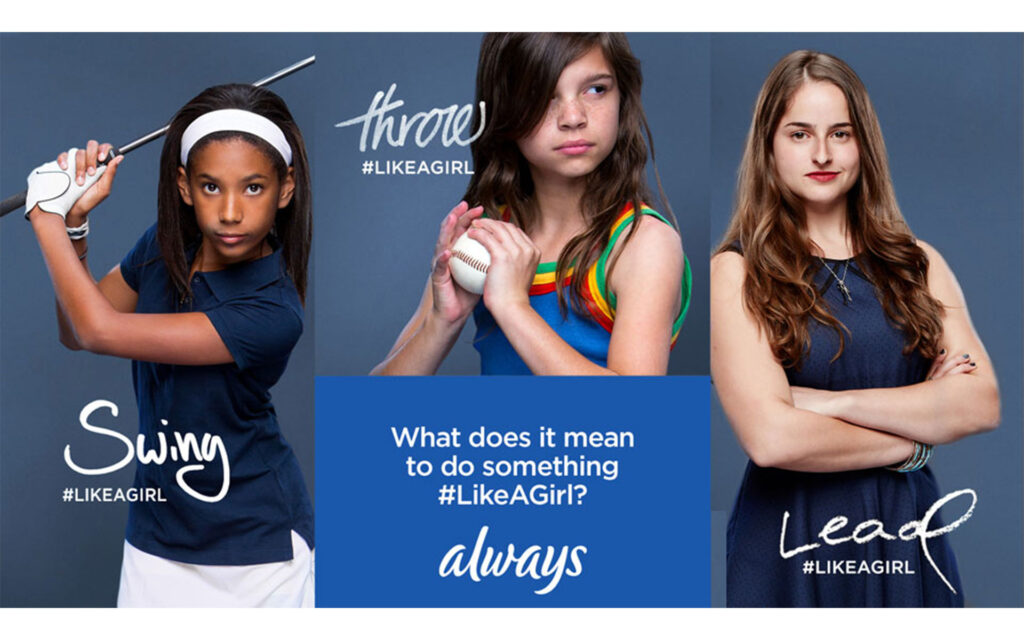
Marketing isn’t just about selling products — it’s about shaping conversations, challenging narratives, and giving brands a purpose beyond profit. Few campaigns have demonstrated this better than Always’ iconic #LikeAGirl campaign, a masterclass in purpose-driven marketing and emotional storytelling.
Launched in 2014, the campaign didn’t simply promote a sanitary pad brand.
It ignited a global conversation about gender stereotypes, self-confidence, and the emotional transition from girlhood to womanhood. Always shifted the meaning of a commonly used insult — “like a girl” — and transformed it into a statement of strength.
Background: The Insight That Sparked It All
Research shows that a girl’s confidence drops dramatically during puberty, often influenced by the language used around them. Phrases like:
- “You run like a girl”
- “You fight like a girl”
- “You throw like a girl”
are used as insults, implying weakness, fragility, or inferiority.
But for young girls, these words shape identity. They internalize the message that “being a girl” equals “being less.”
Always, a brand that has always positioned itself around empowering young girls and guiding them through puberty, saw an opportunity to address the core emotional truth of its consumers.
Insight:
“The phrase ‘Like a Girl’ becomes an insult only after puberty.”
This sociocultural insight became the foundation of the campaign.
The Campaign: What Was “Like a Girl”?
The campaign, created by Leo Burnett and directed by Lauren Greenfield, began with a social experiment-style video. In it, a group of adults and teenagers were asked to perform actions “Like a Girl.”
The result?
- Adults exaggerated weakness.
- Boys made fun of the phrase.
- Teenage girls often hesitated.
But when the same instructions were given to younger girls, they:
- ran confidently,
- threw with force,
- and performed every action with genuine power.
This contrast exposed a simple but painful truth — society teaches girls to see themselves as weak.
The video ended with a powerful message:
“Let’s make ‘Like a Girl’ mean amazing things.”
Why the Campaign Worked: Marketing Breakdown
1️⃣ Emotional Storytelling
The video wasn’t a product ad.
It was an emotional narrative that made viewers reflect. This created high engagement, viral sharing, and deep brand affection.
2️⃣ Universal Relevance
Every woman has experienced gendered language.
Every man has heard it.
The campaign tapped into a shared cultural experience that transcended demographics.
3️⃣ Perfect Fit with Brand Purpose
Always has always focused on:
- puberty education,
- menstrual health,
- and confidence-building.
This campaign aligned perfectly with its core mission — empowering young girls.
4️⃣ Social Experiment + Authenticity
The real reactions made it relatable and believable. It didn’t feel scripted. It felt real — because it was.
5️⃣ Hashtag that Became a Movement
The hashtag #LikeAGirl became a rallying cry.
Millions shared their stories, changing a cultural phrase overnight.
Results: A Global Impact
The campaign wasn’t just viral — it was revolutionary.
- 85+ million views globally in the first few months
- #1 YouTube ad of 2014
- Over 4.4 billion impressions
- Increased Always’ brand preference by more than 50%
- UN recognition, multiple Cannes Lions, and countless global awards
Most importantly, a study later showed that 76% of girls aged 16–24 no longer saw “like a girl” as an insult after the campaign.
The phrase had been redefined.
Key Marketing Lessons from “Like a Girl”
🔹 Purpose builds loyalty
Consumers connect emotionally to brands that stand for something meaningful.
🔹 Insight is everything
A deep understanding of cultural pain points can unlock powerful storytelling.
🔹 Simplicity wins
One phrase.
One question.
One powerful message.
🔹 Virality is earned, not forced
People share content that makes them feel, not content that asks them to share.
🔹 Align purpose with product
The campaign didn’t feel forced because Always genuinely supports girls’ development through puberty education programs.
Conclusion: When Marketing Creates Change
The “Like a Girl” campaign is more than a marketing case study.
It’s proof that brands have the power to reshape society’s thinking. Always took a derogatory phrase and turned it into a badge of honor — all while deepening its emotional relationship with consumers.
In a world where brands often talk about empowerment, Always actually delivered it.
And that’s what makes #LikeAGirl one of the most powerful and transformative campaigns of our time

Leave a Reply