
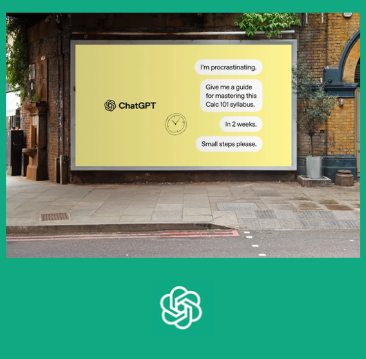
When OpenAI rolled out Chat GPT’s first big brand campaign in 2025, they skipped the common “tech-future” theatrics. Instead, they presented AI through simple, everyday moments — like planning a trip, fixing a recipe, or drafting an email. The bold creative direction paid off spectacularly: by late 2025, Chat GPT had grown to roughly 800 million weekly active users, doubling from about 400 million at the start of the year.
On top of that, daily engagement skyrocketed: the platform handled roughly 2.5 billion user prompts per day — a dramatic sign of deep integration into users’ daily routines.
That level of usage has transformed Chat GPT from a niche “AI-gadget” into a mass-market utility. The campaign’s focus on relatable human stories helped drive this adoption — because people didn’t adopt ChatGPT out of tech fascination; they adopted it because it felt relevant to their everyday lives.
Marketing Lessons:
Scale matters: 800 million weekly users places Chat GPT among the most widely used digital platforms globally, proving that broad reach can be achieved fast with the right positioning.
Engagement beats hype: 2.5 billion daily prompts show that users aren’t just signing up — they keep coming back, using ChatGPT for real tasks.
Relevance is the gateway to adoption: By portraying AI as helpful in routine personal and work-related tasks, OpenAI expanded the user base far beyond early adopters or tech-savvy audiences.
In essence, Open AI’s 2025 brand push did more than market a product — it normalized AI as a part of everyday life. And given the scale of adoption and usage, the campaign did not just tell a story, it changed behaviors. For marketers and strategists, this case is a reminder that when you align product value with real human need, a campaign can deliver impact that shows up in millions — not just impressions.
Leave a Reply